
The Texts
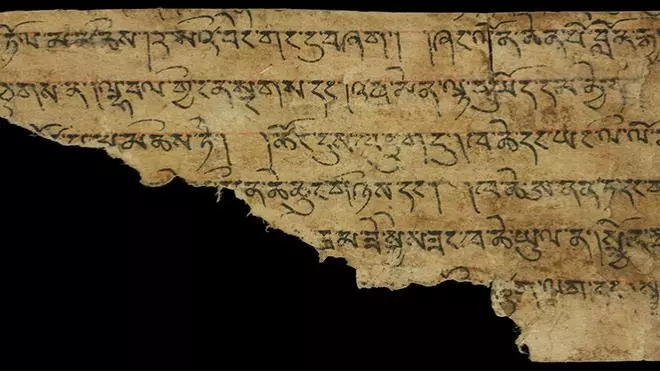
This database lists Tibetan historical documents from the time of the late empire up to the sixteenth century, which are legal or relevant to law in some way. It contains extracts and translations, as well as lists of references.
Fernanda Pirie and Charles Manson compiled and created this database and are responsible for the translations. They are grateful to Hamsa Rajan for her patient assistance with preparing the documents. Readers are invited to send comments and corrections to fernanda.pirie@csls.ox.ac.uk.
Jump to
Narratives and excerpts (10th–16th centuries)
Legal texts in translation (14th-17th centuries)
Summary of other relevant documents (not included in the projects)
Note on transliteration, translation, and references
Narratives and excerpts (10th–16th centuries)
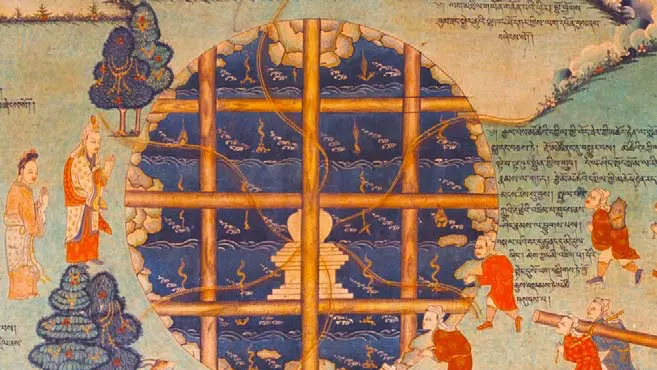
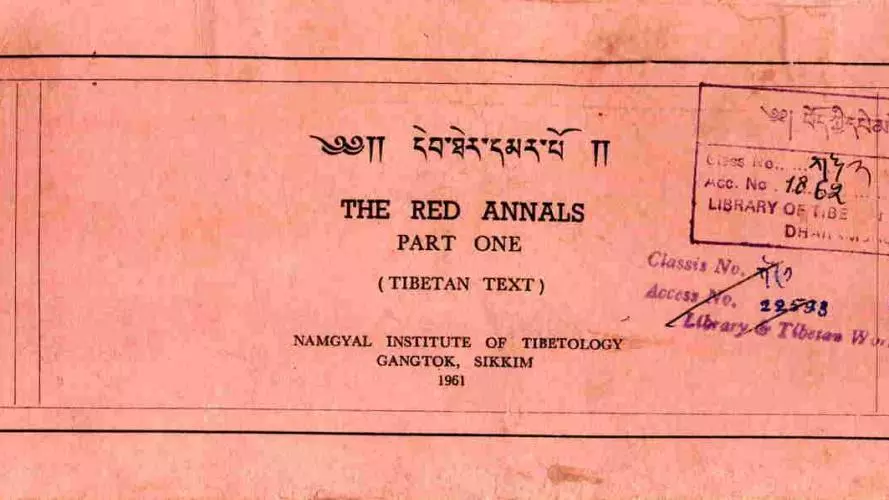
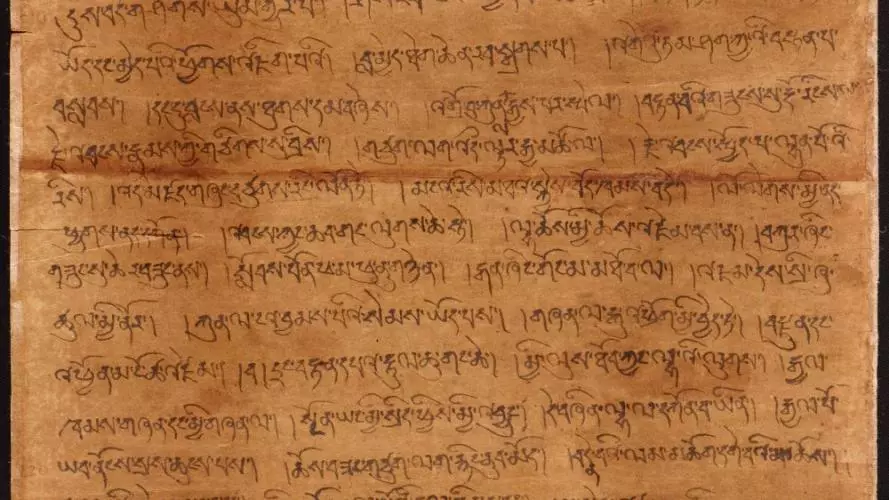
These historical texts all concern law in some way. Many are Religious Histories (chos 'byung), which recount the history of Buddhism in India, Tibet, and surrounding countries. There are also testaments (bka' chems) and other historical works. Some of the most relevant scholarly references are also noted, although these are not intended to be comprehensive.
Legal texts in translation (14th-17th centuries)
Summary of other relevant documents (not included in the projects)
(980s) Ordinance of Lha bla ma Ye shes ʼod
The ruler complains about corrupt tantric practices and says that the good karma of living beings is exhausted and the law of the kings (rgyal po'i khrims) is impaired.
See further:
Karmay, Samten. 1980. The Ordinance of Lha Bla-ma Ye-shes-ʼod. In M. Aris and Aung San Suu Kyi (eds) Tibetan Studies in Honour of Hugh Richardson. Warminster: Aris and Phillips. pp. 150–62.
Schaeffer, Kurtis R. 2013. The Ordinance of Yeshé Öd to Tantric Practitioners. In K. Schaeffer, M. Kapstein, and G. Tuttle (eds), Sources of Tibetan Tradition. New York: Columbia University Press. pp. 168–73.
(1278) Phags pa's Shes bya rab gsal
Explanation of the Subject of Cognition' and his ‘Advice to Prince Jibigtemür (rgyal bu ji big de mur la gdam da byas nor bu'i phren ba). Advises abolition of capital punishment.
See further:
Wallace, Vesna. 2010. Legalized Violence: Punitive Measures of Buddhist Khans in Mongolia. In M. Jerryson (ed.) Buddhist Warfare. New York: Oxford University Press. pp. 92–93.
Krug, Adam C. 2015. Pakpa's Verses on Governance in Advice to Prince Jibik Temür: A Jewel Rosary, Cahiers d'Extrême-Asie 24: 117–44.
(1277–1362) Fifteen documents from the Yuan archives
Concerning Tibet, written in Mongolian script (includes Tibetan, Chinese, and English translations)
See Sgrolkar, Xiao Huaiyuan, Vodzer, et al. 1995. A Collection of Historical Archives of Tibet. Xizang lishi dang'an huicui. Bod kyi lo rgyus yig tshags gces bsdus. Beijing: Cultural Relics Publishing House (Wensu chubanshe).
(1289–1382) Documents issued by the Mongolian emperors and others concerning Tibet
See Everding, Karl-Heinz. 2006. Herrscherurkunden aus der Zeit des mongolischen Grossreiches für tibetische Adelshäuser, Geistliche und Klöster. Halle: International Institute for Tibetan and Buddhist Studies.
Vol. 1 contains ten documents in ʼPhags pa script; Vol. 2: 25 documents in Tibetan script, issued by the Mongolian qans, their teachers, and their (Tibetan) officers.
(1305) Zhalu edict of Qayishan
The Mongol prince here grants protection and support to the Halu monastery and prohibits violence against monks.
See further:
Sgrolkar, Xiao Huaiyuan, Vodzer, et al. 1995. A Collection of Historical Archives of Tibet. Xizang lishi dang'an huicui. Bod kyi lo rgyus yig tshags gces bsdus. Beijing: Cultural Relics Publishing House (Wensu chubanshe), no. 14.
Gray Tuttle. 2013. The Zhalu Edict of the Mongol Prince Qayishan. In K. Schaeffer, M. Kapstein, and G. Tuttle (eds), Sources of Tibetan Tradition. New York: Columbia University Press. pp. pp. 342–44.
(1309) Edict of Öleitü qa'an
Orders mutilation punishments for anyone insulting monks. The edict was revoked within months.
See further:
Schuh, Dieter. 1977. Erlasse und Sendschreiben mongolischer Herrscher für tibetische Geisliche Ein Beitrag zur Kenntnis der Urkunden des tibetischen Mittelalters und ihrer Diplomatik. Sankt Augustin: VGH Wissenschaftsverlag, pp. 126–28.
Francke, A.H. 1990. Comments on a Passage in the Hu-lan deb-ther: the ‘Edict of Öljeitü' on the Punishment of Attacks against Tibetan Monks. In Paolo Daffina (ed.) Indo-Sino-Tibetica: Studi in Onore de Luciano Petech. Roma: Bardi Editore [and other references therein].
(1331) Edict issued by the Yuan emperor to Tugh Temür to the Third Karmapa, Rangjung Dorje
By this edict the emperor summons the Karmapa to the imperial court. It states that if he refuses to come it will indicate an unfaithful mind, lack of intention to work for the benefit of others, failure to think of the doctrine, failure to consider the hardships and suffering of sentient beings, and ‘violation of the edict of my great legal system'.
See further:
Schuh, Dieter. 1977. Erlasse und Sendschreiben mongolischer Herrscher für tibetische Geisliche Ein Beitrag zur Kenntnis der Urkunden des tibetischen Mittelalters und ihrer Diplomatik. Sankt Augustin: VGH Wissenschaftsverlag, pp. 128–37.
Schwieger, Peter. 2015. The Dalai Lama and the Emperor of China. New York : Columbia University Press, p. 19.
(1373–1486) Eights documents from the Ming archives concerning Tibet
written in Tibetan and Chinese (includes English translations)
See Sgrolkar, Xiao Huaiyuan, Vodzer, et al. 1995. A Collection of Historical Archives of Tibet. Xizang lishi dang'an huicui. Bod kyi lo rgyus yig tshags gces bsdus. Beijing: Cultural Relics Publishing House (Wensu chubanshe).
(1407) Report of a visit by the Fifth Karmapa, Dezhin Shekpa (sDe bzhin gshegs pa), to the Ming court.
The report is by one of the Tibetans present. He states that it was the emperor's intention to bring Tibet under [imperial] law by means of warfare, as in the times of the Mongols, and that he intended to subdue the country through a single rule of priest and patron, as the Sakyapa and Mongols had done. The writer also reports that he saw a sequence of three petitions, through which the Phakmodru ruler, Drakpa Gyaltsen (Grags pa rgyal mthan), lamented that without an overlord there would be no protection, and through which he offered his head and body to the emperor.
See further:
This report is contained in the mKhas pa'i dga ston (1564).
Schwieger, Peter. 2015. The Dalai Lama and the Emperor of China. New York: Columbia University Press, pp. 21–22.
Schuh, Dieter. 1976. Wie ist die Einladung des fünften Karma-pa an den chinesischen Kaiserhof als Fortführung der Tibet-Politik der Mongolen-Khane zu verstehen? In Altaica Collecta. Berichte und Vorträge der XVII, Walther Heissig (ed.) Wiesbaden: Otto Harrassowitz.
The "lawcode of Karma bsTan skyong dBang po" (1606–1642)
Several publications refer to a law code (zhal lce bcu drug), supposedly commissioned by the Tsang ruler Karma Tenkyong Wangpo. This is text is the subject of investigation of Phase 2 of this project.
See further:
gTsang pa sde srid bstan skyong dbang po'i ʼdus su gtan la phab pa'i khrims yig zhal lce bcu drug. 2004. In Bsod nams tshe ring (ed.) Snga rabs bod kyi srid khrims. Chengdu: Bod ljongs bod yig dpe rnying dpe skrun khang.
Tibetan Legal Materials. 1985. Dharamsala: The Library of Tibetan Works and Archives.
Tucci, Giuseppe. 1949. Tibetan Painted Scrolls. Roma: Libreria dello Stato, Vol II, p. 697.
Cüppers, Christopher. 2015. gTsang khrims yig chen mo: ein tibetischer Rechtskodex in der Sammlung der National Archives in Kathmandu. In D. Schuh (ed.) Secular Law and Order in the Tibetan Highland. Andiast: International Institute for Tibetan and Buddhist Studies.
Ehrhard, Franz-Karl. 2015. ‘A Thousand-spoke Golden Wheel of Secular Law': The Preamble to the Law Code of the Kings of gTsang. In D. Schuh (ed.) Secular Law and Order in the Tibetan Highland. Andiast: International Institute for Tibetan and Buddhist Studies, pp. 105–25.
For further details and sources, see: Berthe Jansen. 2018. The Monastery Rules: Buddhist Monastic Organization in Pre-Modern Tibet. University of California Press.
(11th century) Rong zom bca' yig
Author: Rong zom chos bzang (1042–1136)
Title: Rong zom chos bzang gis rang slob dam tshig pa rnams la gsungs pa'i rwa ba brgyad pa'i bca' yig
Source: gSung ʼbum, vol 2. Chengdu: Si khron mi rigs dpe skrun khang. 1999: 399–414.
This lays out rules for a new tantric community of both men and women. It provides that lowly people, such as butchers, hunters, thieves, robbers, and prostitutes are not to take tantric vows. Several rules concern the care of others: beggars should be given food at the gate but not allowed inside (‘outside friends'); lepers should be segregated but fed; those who are too old to work should be cared for.
(12th century) gDan sa bca' yig
Author: Zhang brston ʼgrus pa (1123–1193)
Title: gDan sa nyams dmas su gyar ba'i skabs mdzad pa'i bca' yig.
Source: dPal ldan tshal pa bka' brgyud kyi bstan pa'i mnga' bdag zhang g.yu brag pa brston ʼgrus grags pa'i gsung ʼbum rin po che: bka' thor bu, shog dril chen mo. Kathmandu: Shree Gautam Buddha Vihar. 2004: 176–81.
This text was created by the founder of the monastery for the religious community. It confirms that behaviour must be in accordance with earlier bca' khrims. These concern, inter alia, women and debts (at times of famine).
(1240s) ʼBri gung mthil bca' yig
Author: sPyan snga grags pa ʼbyung gnas (1175–1255)
Two versions exist:
a) "Magha dha rdo rje gdan ʼbri gung byang chub gling gi bca' khrims". In: gSung ʼbum, vol 1. Delhi: Drikung Kagyu Publications. 2002: 247–50.
b) "rDo rje gdan ʼbri gung byang chub gling gi rtsa khrims". In: A mgon rin po che (ed.) ʼBri gung bka' brgyud chos mdzod chen mo, vol 34. Lhasa. 2004: 390–94.
The monastery of Drigung Til ('Bri gung mthil byang chub gling) was founded in 1179 and was already powerful, with good allies and people official positions, by the mid-thirteenth century. It seems that the monastery was establishing itself as an elite establishment, as most rules are concerned with its reputation in some way. The rules prohibit beggars from becoming monks, they prohibit alcohol drinking, they are concerned with ser kyi pa, ‘yellow men', meaning lay practitioners who pretend to be monks. They are to be caught and forced to take vows or expelled from the monastery. In the gSung ʼbum the text is called a bca' khrims, or rtsa khrims, which could be a reference to existing rules, as well as to the actual text.
(1417) Byams pa gling bca' yig
Author: bLo bzang grags pa'i dpal (Tsong kha pa).
Title: Byams pa gling na bzhugs pa'i spyi'i dge ʼdun la khrims su bca' ba'i yi ge.
Source: gSung ʼbum, vol 2. New Delhi: Mongolian lama Gurudeva. 1978–79: 250b–58a.
The text concerns a monastic community in north-east central Tibet and its relations with lay-people. This includes corvée labour. It says that monks are not to be involved too much in secular affairs and laws.
(16th century) dPal ri chos sde bca' yig
Author: Shes rab ʼod zer (1518–1584/72)
Title: Grwa tshang gi bca' yig bstan pa'i nyi ʼod.
Source: gSung ʼbum, Gonpo Tsetan (ed.) Gangtok. 1977: 455–60.
The author was a Nyingma reformer, who founded the monastery. The text refers to both the rgyal khrims and the chos khrims. Monks are not supposed to engage in litigation (bka' mchu). However, if they commit acts of violence, revolt, or meddling, they should be punished according to both systems of law. Other offences are dealt with according to the monastic rules. The text refers to the Pratimoksha sutra (containing the monastic vows) as nang pa sangs rgyas pa'i khrims kyi yi ge, that is, the Buddhist law-book.
(16th century) mTshur phu bca' yig
Author: Mi bskyod rdo rje (1507–1554).
Title: dGa' tshal karma gzhung lugs gling dang por sgar chen ʼdzam gling rgyan du bzhugs dus kyi ʼphral gyi bca' yig.
Source: gSung ʼbum, vol 3. Lhasa. 2004: 700–15.
mTshur phu monastery was founded in 1159. The author is the Eighth Karmapa. The text is closely concerned with Buddhist ethics and morality, suggesting Vinayic influences, rather than being closely related to recent events. It has a Buddhist structure, discussing the four root vows (sex, stealing, killing, lying), breach of which cases downfall, along with waste and debt. It give detailed guidance about clothes, male decorations, also the content of dharma, such as mental cravings. It sets a model of ideal behaviour.
Note on transliteration, translation, and references
Titles of documents are listed in English, Tibetan, and/or Sanskrit, as relevant. Tibetan titles are Romanised in Wylie, while Sanskrit titles and names are Romanised in the standard form of Sanskrit Romanisation. Tibetan historical figures and the names of places and monasteries are often transcribed into a form that reflects modern pronunciation. The Wylie transliteration is provided in brackets the first time the name is mentioned in each document.