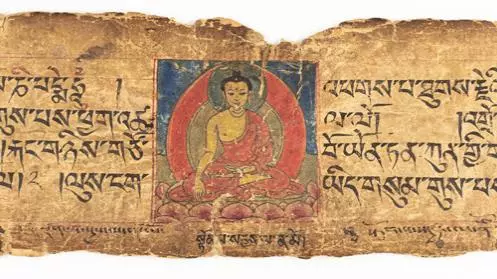
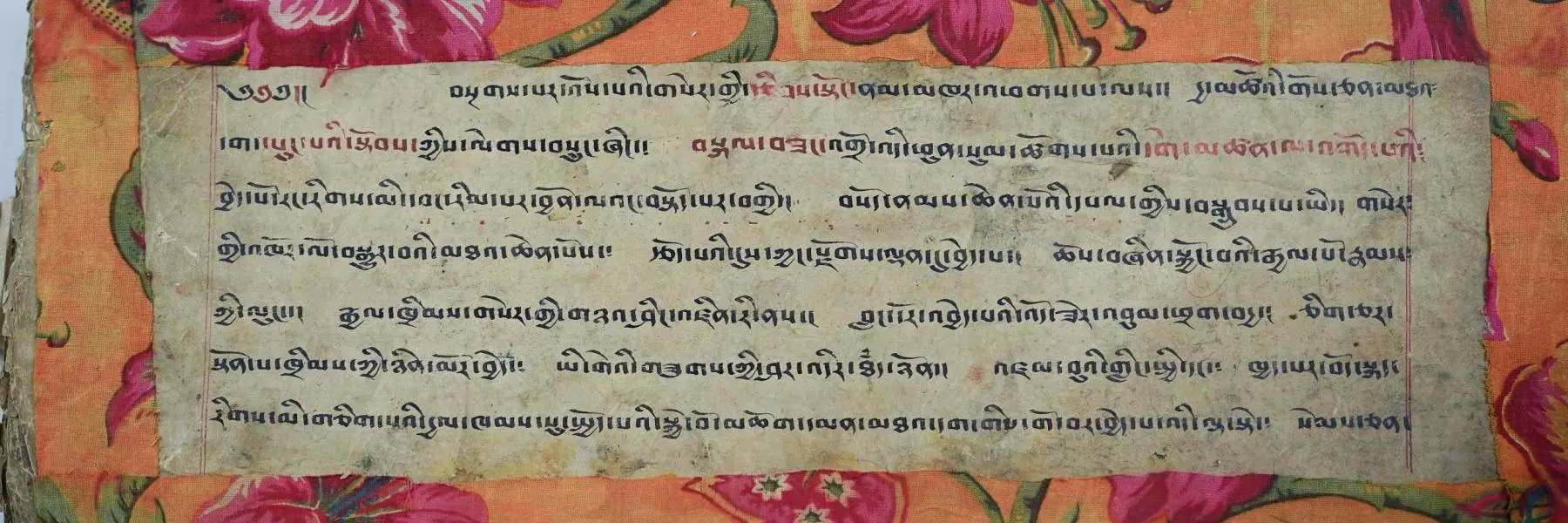
This blog post accompanies a working English translation of the Gtsang khrims yig chen mo. This legal code was composed in 1631 under the auspices of the Tsangpa ruler, Karma Tenkyong Wangpo (r. 1620–1642). It is one of only two legal texts known to have been created during the Tsang period, and neither has appeared in English before. A translation of the second, a set of guidelines for judicial officials, known as the zhal lce bcu drug, is in preparation.
Overview
The code covers a wide range of subjects. It sets out provisions on homicide, wounding and injury, violence in the pursuit of claims, religious offences, forgery, theft and robbery, adultery and divorce, oaths and ordeals, the allowances due to officials travelling on the ruler’s business, and a closing group of administrative and procedural rules. Some sections consist of graded schedules: compensation for killing is tied to the standing of the victim, and the text works down through the ranks of officeholders, monks, estate servants, and private landholders, assigning an amount to each. Other provisions are procedural; the long section on oaths and ordeals describes the hot-stone and boiling-oil tests in some detail; the section on theft moves between compensation, corporal punishment, and the expulsion of monastic offenders under their monastery’s own rules. The whole closes with verses that, like the preface, set the code within a cosmological frame.
The preface is of a different character. Ideological more than administrative, it places the ruler’s authority to make law within a Buddhist genealogy. That lineage runs from a canonical source for Buddhist conceptions of kingship (Suvarṇaprabhāsottama sūtra), through the three Dharma kings of the Tibetan empire to Karma Tenkyong Wangpo, himself. Songtsen Gampo, the preface holds, established the law of the ten virtues and the sixteen pure human principles (mi chos gtsang ma bcu drug); the present ruler is placed in that succession, and the concluding verses look ahead to the inauguration of a new ‘perfect age’ (rdzogs ldan). The tension this sets up will be familiar to readers of the project’s other translations and excerpts.
The substance of the code responds to issues of its day. Several provisions adjust earlier practice by, for example, standardizing measures that had varied from one place to another, curbing what the text presents as the abuse of monastic sanctuary, and reining in the expenses that officials on judicial missions could demand. The code thus gives a view, albeit partial, of administration and dispute settlement in seventeenth-century Tsang.
Historical context
The Tsang code is preceded by the Mirror of the Two Laws (Khrims gnyis lta ba’i me long), the earliest post-imperial Tibetan legal text known to survive, which was written by the Phakmodru rulers in the decades after 1368. That text was translated and published on this site under a previous AHRC-funded project, and can be read here. The two texts share not only thematic concerns but concrete, if selective, legal material: the Tsang Code calculates homicide compensation using the same vocabulary, provides for the same type of deductions from certain fines, and prescribes hot-stone and boiling-oil ordeals, which were introduced by the shared proverb, “Lying is a vast expanse; the oath is a narrow pathway”.
The current translation stands just before the zhal lce collections – various legal themes, organized into sixteen, thirteen, and twelve sections – which underpinned the legal order of the Ganden Phodrang, the government of the Dalai Lamas, and which are a central concern of the present project.The zhal lce in 16 sections was probably composed in the 1630s or early 1640s; the ones in twelve and thirteen sections belong to the 1650s. The relationship between the three bodies of text is not, however, a simple line of descent. The later zhal lce draw more on the Mirror of the Two Laws, at times verbatim, reaching back past the 1631 code to the older treatise rather than through it. The Tsang code’s borrowings from the Mirror, by contrast, are more limited and, where they occur, tend to be paraphrased.
Textual identity and provenance
What we are calling the Great Tsang Legal Code carries no title in any of its surviving manuscripts; the name we use for it is owed to the Desi Sangyé Gyatso (1653–1705), who gathered it into his later collection of legal materials. Several of the manuscripts that contain the Tsang code, in fact, open by styling the text a gtam, that is, the ‘speech’ or ‘proclamation’ of Karma Tenkyong Wangpo. By contrast, the Mirror of the Two Laws describes itself as a ‘treatise’ (bstan bcos) and later circulated under the rubric zhal lce. These labels – legal code, treatise, proclamation, zhal lce – were applied loosely, often by later Tibetan hands, and the texts cite one another in ways that seem to be constructing a lineage as much as recording one. In this context, the ‘code’ published here may be viewed as a collation and clarification of administrative regulations that have gradually emerged around a recurring group of subjects rather than a comprehensive set of definitive rules. These are some of themes the current project will investigate.
Similar to the Mirror of the Two Laws, this is a working rather than a final translation. It draws from the comparative reading of ten manuscript version. A fuller study of the text regarding its sources, date, the circumstances of its making, and a thorough analysis of its sections will be published separately. The translation is the work of Jonathan Samuels and Daniel Wojahn, co-edited by Fernanda Pirie, the project’s principal investigator. A good many uncertainties remain, and the translators would welcome comments and feedback.